I still remember the first time I noticed a game actively adapting to how I played. It was during a horror game session around 2015, and I’d gotten into the habit of checking every corner obsessively. The game seemed to catch on enemies started appearing in the last places I’d check, right when my guard was slipping. At first, I thought I was paranoid. Turns out, the game’s AI was learning my patterns.
That moment marked my deeper dive into understanding how artificial intelligence has been quietly revolutionizing the way games respond to individual players. These days, AI driven customization has become so sophisticated that most players experience personalized gameplay without even realizing the game is constantly adjusting itself around their behaviors, skill levels, and preferences.
The Evolution From One Size Fits All Gaming
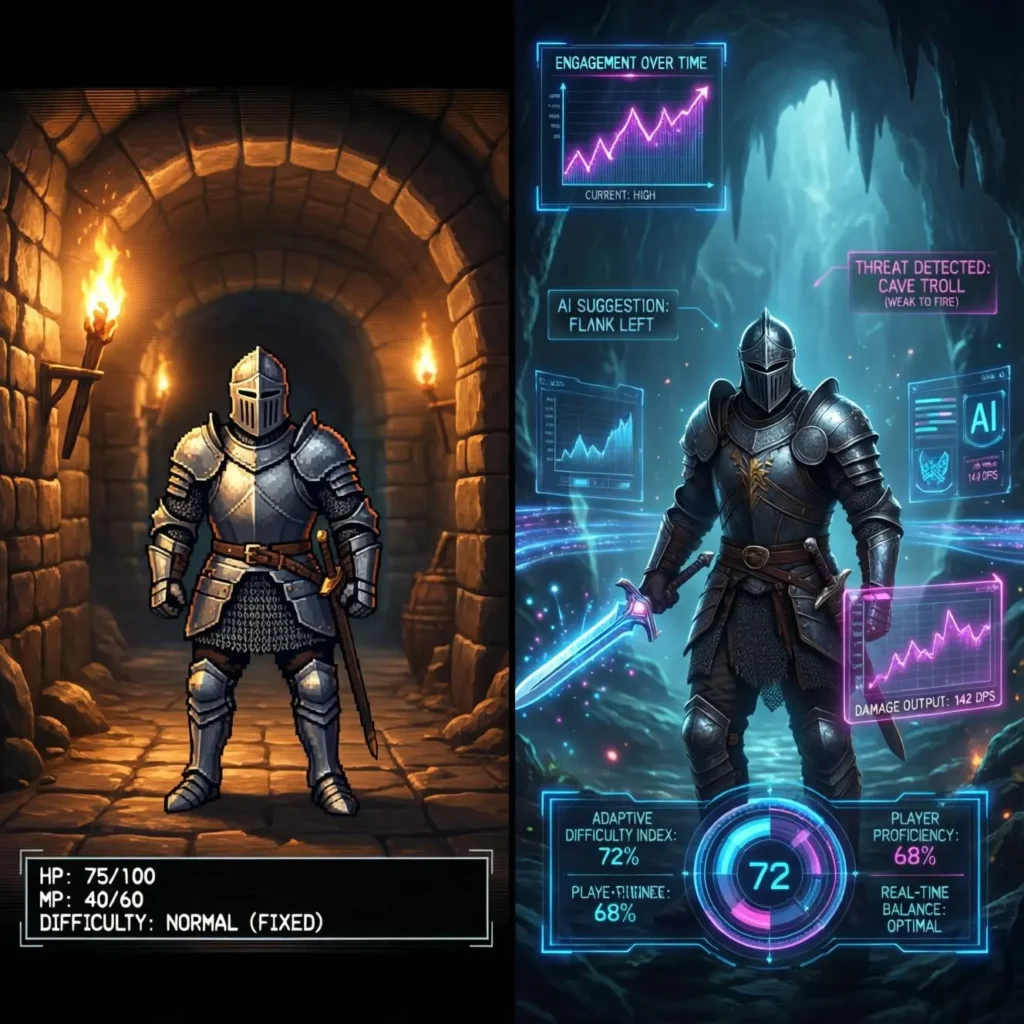
Traditional game design operated on a fairly rigid principle: create difficulty levels (easy, medium, hard) and hope players picked the right one. The problem? A player might be excellent at combat but terrible at puzzles, or vice versa. Static difficulty settings couldn’t account for the nuanced reality of how people actually play games.
The industry’s answer came through dynamic difficulty adjustment, or DDA. Early implementations were clunky you’d die too many times in a row, and suddenly enemies would deal less damage. It felt patronizing because you could sense the game holding your hand.
Modern AI driven customization is far more subtle. Instead of simply tweaking damage numbers, today’s systems analyze dozens of variables: how long you take to complete sections, which abilities you favor, your exploration patterns, even the time of day you typically play. The adjustments happen across multiple dimensions simultaneously, creating an experience that feels tailor made without feeling manipulated.
How Games Actually Learn About You
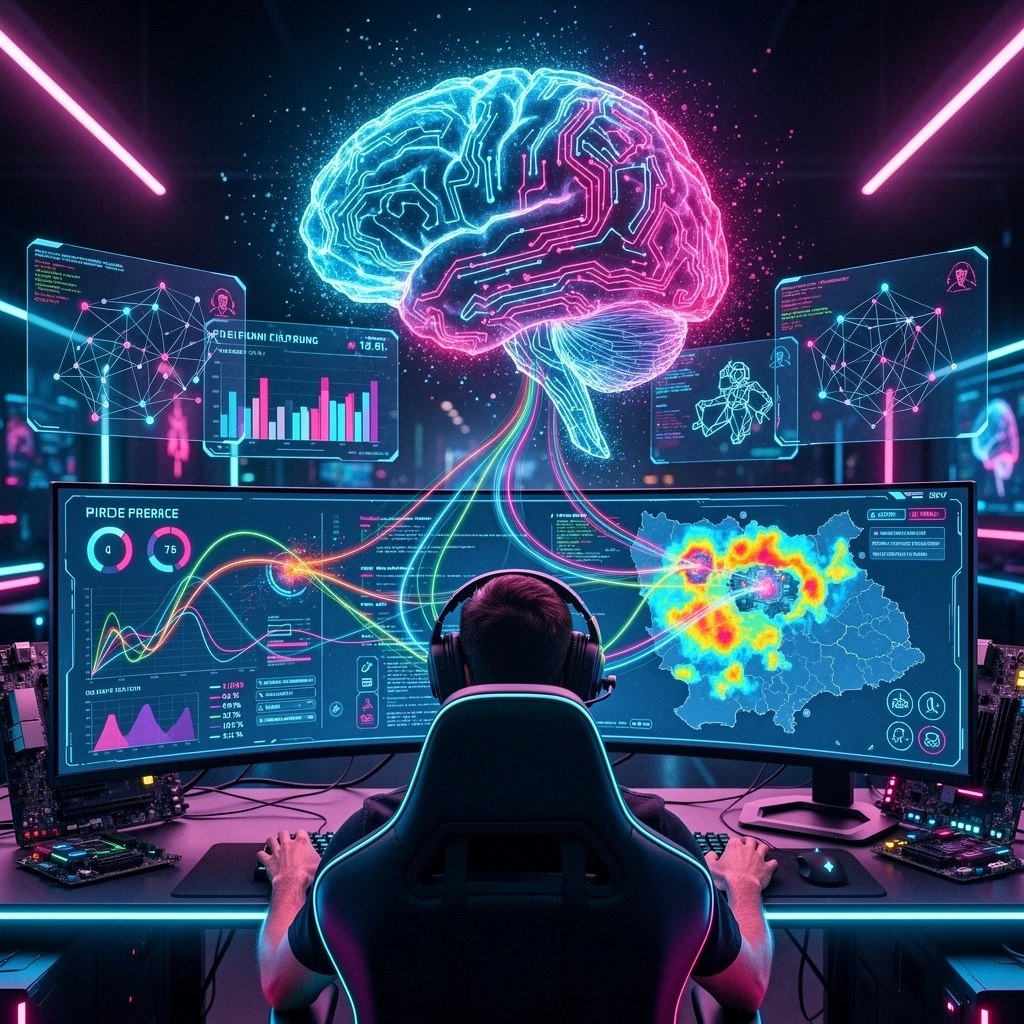
When I interviewed a game designer last year for a freelance piece, she walked me through the data points their AI systems track. The list was staggering. In their open-world RPG, the system monitored everything from combat success rates and resource management to dialogue choices and fast-travel frequency.
The AI doesn’t just collect this data it builds a player profile. Are you someone who rushes through main quests or someone who completes every side activity before progressing? Do you reload saves when conversations go poorly, or do you live with consequences? The game uses machine learning algorithms to categorize your play style and predict what kind of content you’ll find engaging.
One fascinating example is the Resident Evil series, particularly from RE4 onward. The games employ what Capcom calls a “dynamic game balancing” system. If you’re consistently landing headshots and managing resources well, you’ll find slightly less ammo in containers and tougher enemy placements. Struggling players might discover a well placed health pack right when they need it most though the placement feels organic, not obviously spawned for their benefit.
Personalization Beyond Difficulty
Difficulty adjustment is just the foundation. Where things get really interesting is in content customization and narrative adaptation.
Middle-earth: Shadow of Mordor introduced the Nemesis System, which creates personalized antagonists based on your gameplay. Enemy captains who defeat you gain power and remember your encounters, developing personality traits that respond to how you fight. If you constantly use stealth attacks, a nemesis might become paranoid and harder to ambush. It’s AI driven storytelling that ensures no two players experience identical narratives.
I’ve also noticed this in racing games like Forza Horizon 5, which uses what Microsoft calls “Drivatar” technology. The AI doesn’t just control opponent racers it learns from how real players drive, then populates your races with AI versions of your friends’ driving styles. Someone who takes clean racing lines appears different in your game than someone who power-slides around every corner. The AI essentially creates personality driven opponents, not just speed tuned obstacles.
The Invisible Hand of Engagement Optimization
Here’s where things get more complicated ethically. Modern games, particularly live-service titles, use AI to maximize player engagement and retention. The matchmaking system in competitive games like Call of Duty or Apex Legends doesn’t just pair you with similarly skilled players it’s analyzing your recent performance, win streaks, and even spending patterns to create matches designed to keep you playing.
Epic Games’ matchmaking patent reveals systems that might place you in matches where you’re likely to see opponents using cosmetic items, potentially encouraging purchases. After a losing streak, you might get matched into a game where you perform better, giving you that dopamine hit that keeps you queuing for “just one more match.”
I’m genuinely torn about these systems. On one hand, they create more consistently engaging experiences. On the other, they’re deliberately engineered to be habit forming, blurring the line between good game design and psychological manipulation.
Limitations and When AI Gets It Wrong
AI customization isn’t perfect, and I’ve encountered plenty of instances where it falls flat. The systems can’t account for unusual circumstances maybe you let your younger sibling play on your account, and now the game thinks you’ve suddenly become terrible. Or you’re trying a new play style experimentally, and the AI adjusts the game in ways that make that experimentation frustrating.
There’s also the “valley” problem I’ve experienced in several games: when you’re right between skill levels, the AI can’t settle on appropriate adjustments, leading to wild swings in difficulty that break immersion. One mission feels too easy; the next feels impossible not because of intentional design but because the AI is miscalibrating.
Privacy concerns deserve mention too. These systems require collecting and analyzing substantial gameplay data. While most companies claim data is anonymized and used only to improve experience, the lack of transparency about exactly what’s collected and how it’s used remains a legitimate concern for many players.
Looking Ahead
The next frontier seems to be AI generated content customization. Instead of just adjusting difficulty or encounter frequency, emerging systems are beginning to generate quest variations, dialogue options, and even level layouts based on individual preferences.
I recently tested an indie game using procedural generation guided by AI analysis of what types of level designs I navigated most comfortably. The results were hit-or-miss, but the potential is clear: games that don’t just respond to how you play but actively reshape their content around your preferences.
The question isn’t whether AI will continue customizing gameplay that’s inevitable. The question is whether the industry will implement these systems transparently and ethically, or whether they’ll primarily serve engagement metrics and monetization strategies.
Having watched this technology evolve over the past decade, I’m cautiously optimistic. The best implementations enhance player experience without feeling manipulative. When done right, AI customization disappears into the background, leaving you with the impression that the game was simply designed perfectly for you which, in a sense, it was.
Frequently Asked Questions
Q: Can I turn off AI driven customization in games?
Most games don’t offer direct control over these systems, though some let you lock difficulty settings or disable certain adaptive features in the options menu.
Q: Does AI customization work in single player and multiplayer games differently?
Yes. Single player games typically focus on difficulty and content pacing, while multiplayer games primarily use AI for matchmaking and balancing competitive experiences.
Q: Is my gameplay data being sold to third parties?
Reputable publishers typically don’t sell individual gameplay data, though they may share aggregated, anonymized statistics. Always check a game’s privacy policy.
Q: Will AI customization eventually replace human game designers?
No. AI customizes within frameworks created by human designers. It adjusts variables and responds to player behavior, but humans still create the core content, mechanics, and experiences.
Q: How can I tell if a game is using AI to customize my experience?
Unless developers explicitly mention it, you usually can’t tell definitively. Signs include difficulty that seems to match your performance unusually well or content that feels particularly suited to your play style.